Tuesday, 19 June 2012

Ancient Egypt

Around 5000 years ago the ancient Egyptians established an extraordinary and enduring civilization. 

  1. The Nile river was very important for agriculture, it was the water source for the whole empire.

   2.   The writing: They wrote on papyrus, not on paper. They hadn't got an alphabet, they used hieroglyphs.


3. Afterlife: They believed that humans possessed a ka, or life-force, which left the body at the point of death.

Thursday, 10 May 2012

Pollution

Pollution is the introduction of contaminants into a natural environment.


We can distinguish three different pollution kinds:

  1. Water pollution: Some of the waste from towns, villages or factories is poisonous and end up in rivers and oceans.
For further information:


     2.   Air pollution: harmful substances enter the air we breathe.


For further information:


     3.   Land pollution: we produce a lot of rubbish, which can pollute the land with dangerous substances for    the soil.


Saturday, 28 April 2012

Rural Vs. Urban life.

Do you live in a rural or in an urban area? Answer this question as a comment to this post and you will get a lollipop!


Rural and Urban Life.

Urban life: Cities and towns:

  1. There are many different kinds of buildings.
  2. There are different urban transport systems: underground trains ( Ex. London´s Tube, NY´s Subway or Madrid´s Metro) or bus lines.
  3. There's a complex system of streets, avenues, squares and roads to move around a city.

Rural life: villages and hamlets.
  1. There aren't so many buildings and they are small.
  2. The public means of transport are used to go to other towns, cities or villages.
  3. Streets are narrow because the traffic is not a state.
  4. We can find farms in the villages or around them since they are on the countryside.


Tuesday, 24 April 2012

The tides

There are two different tides:
  1. The low tide.
  2. The high tide.

The tides are provoked by the Moon's Gravity.

Saturday, 21 April 2012

Oceans and seas.

Oceans are masses of salt water.
VS.
A sea is smaller than an ocean.


Can you place on the map the South China Sea, the Caribbean Sea, and the Mediterranean Sea?

Students leaving comments with underwater life video links will get a lollipop, come on fourth-graders!

Rivers.

A river is a stream of water.


A tributary river flows into another river.


Rivers flow along a channel.
The bottom of the river is the bed.
The sides of the channel are the banks.


Cliffs and plateaus

Cliffs are rock or soil steep walls.


A plateau is the plain where the houses are. 


A plateau is a plain on a higher position.


Glaciers

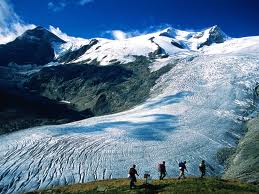
Glaciers are huge areas of moving ice.


Glaciers move downwards because of Gravitation.

Hills, mountains and valleys.

Mountains are high and have pointed tops. On the other hand, hills are not so high and have rounded tops.


Ex: The green ones are hills since they are not so high as the ones on the background, those are mountains: they are pointed topped.


Valleys are low areas among mountains or hills.


Can you see those mountains? 
The valley is between them.

Plains


Plains are large flat areas of land.

Landforms

A landform is a natural shape on the earth's surface.